Sustainability doesn’t only need a certificate. Sometimes simple, conscious decisions make massive differences. Before we talk about carbon offsetting, teak replacement and sustainability frameworks. Let’s talk about paper towel.
Yes – the perfectly crisp, hygienic, “one sheet is never enough” paper towel. The one that feels so clean on your hands. The one that makes wiping the roast chicken grease from a drip tray feel easy. The one you can throw straight into the heavy-duty black bag and never think about again.
No rinsing. No smell. No reusing. No thinking.
Wash your hands? Paper towel. Coffee spill on the wonderfully clean floors? Paper towel. Grubby Bilges? Paper towel. Under the shower floors? The hardcore blue roll, obviously.
Is it just me, or is it addictive?
On our boat, conservatively, we go through around three rolls of kitchen towel a week and we are relatively small. That’s roughly 156 rolls a year. Add in the big blue industrial roll – about one a month – and we’re closer to 168 rolls annually.
That works out to roughly 35–40kg of paper per year. In simple terms, that’s close to one tree – on one boat – just in paper towel.
It doesn’t sound dramatic. Until you multiply it across hundreds or even thousands of yachts.
The Everyday Impact Onboard
Then there’s cling film, zip-locks and aluminum foil. Single-use cleaning wipes. Disposable gloves. Chemical-heavy based surface sprays. Laundry loads for lightly worn uniforms. Bottled water because “it’s easier.”
Convenience. Habit. Speed. Standards.
As crew, especially as a chef and a stew myself – we reach for what is efficient, hygienic, and fast. Guest experience matters. Cleanliness matters. Time pressure is real. Standards are high for a reason. But so is impact.
We use products daily that would never be used in our homes in the same quantities. We wash uniforms after one wear. We run dishwashers half-full. We grab cling film without thinking twice.
The Impact of Plastic and Laundry
And bottled water? On many boats, it’s unavoidable. Let’s say five crew members, one 2L bottle each per day, that’s 35 bottles a week. Over a year, that’s more than 1,800 plastic bottles at a minimum. Double or even triple it in peak summer.
Laundry loads. Don’t even start. Work shorts worn once. Interior uniforms washed daily. Machines not always filled to capacity. Water, electricity, detergent – it all adds up.
The Part We Don’t Like To Admit
Owners don’t decide how many paper towels get used. They don’t decide how many loads of washing get done. They don’t choose which surface spray we reach for. They don’t decide how many disposable gloves are thrown away.
That’s on us.
We talk about owners and emissions. We talk about carbon footprints and sustainability strategies. But much of the daily environmental impact onboard comes from crew habits – from the galley, the laundry and engine room as well as the cleaning cupboard.
Not out of negligence. Out of routine.
This Isn’t About Shame
This isn’t a lecture. It’s not crew shaming. It’s not about lowering standards. It’s about awareness.
Can we reuse a microfiber a few more times before reaching for paper towel? Can we fill the washing machine properly? Can uniforms be worn more than once where appropriate? Can we reduce cling film use or switch to better alternatives?
Small shifts. Conscious decisions.
Before we talk about offsets, maybe we should look at what we’re throwing away every day. Sustainability doesn’t start with certificates. It starts with habits.
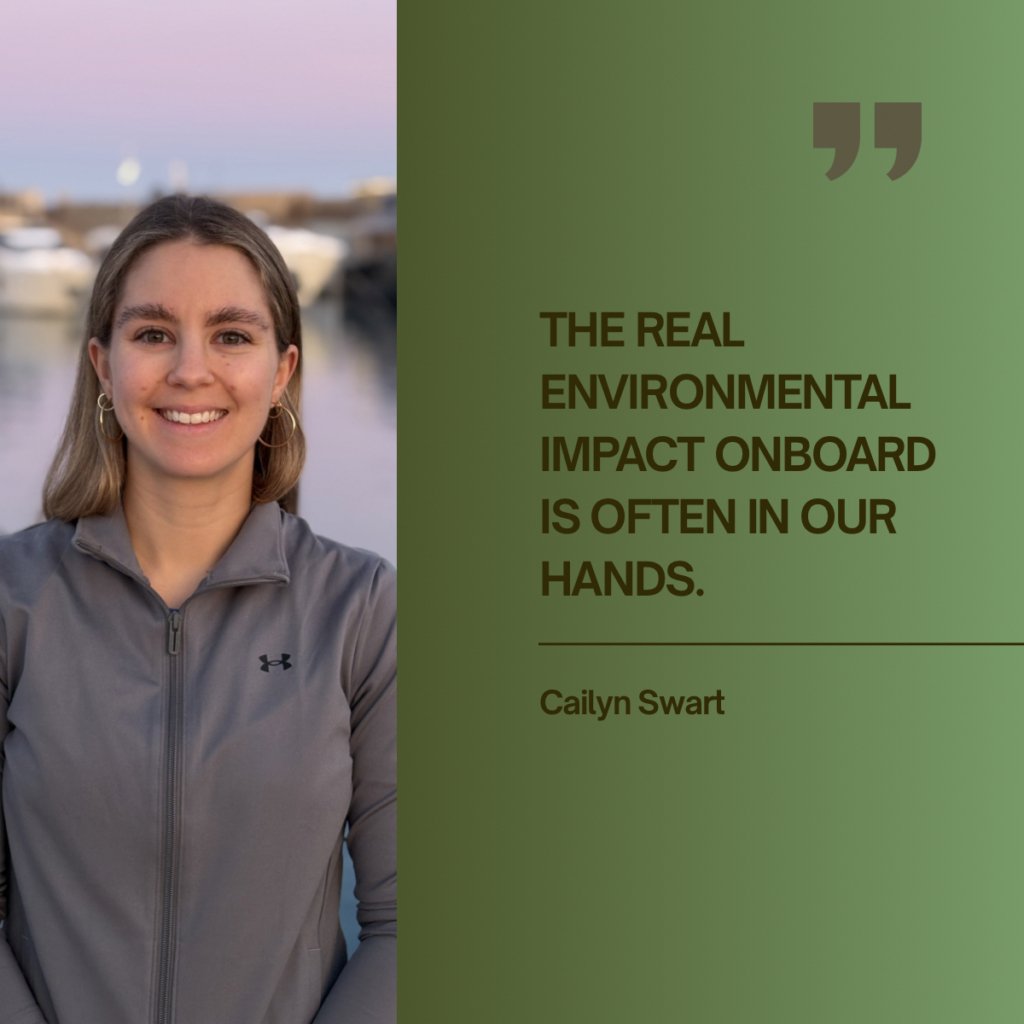
And the real impact? Often, it’s in our hands.