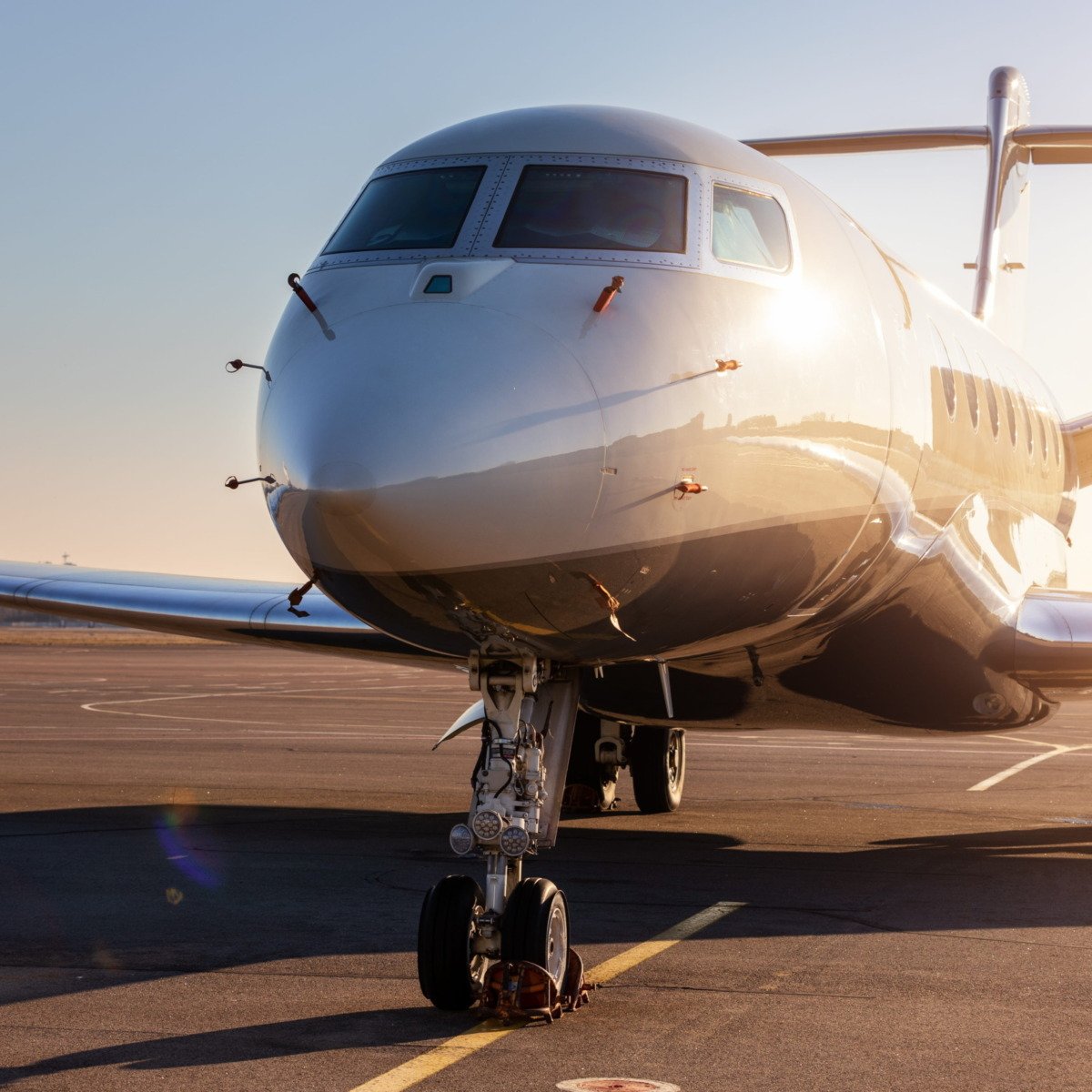
Private aviation is built around freedom, flexibility and efficiency. It allows people to travel where they need to be, when they need to be there. But like all aviation, it also comes with an environmental impact.
For private jet owners and operators, understanding that impact is an important first step. Doing something about it can be surprisingly straightforward.
At Growing Decks, we’ve created a simple way to estimate and offset the carbon emissions associated with private jet use, based on the type of aircraft and the number of hours flown.
How Much Carbon Does a Private Jet Produce?
There isn’t one figure that applies to every private jet. A Very Light Jet flying for an hour will have a very different fuel consumption from a Large Jet flying for the same amount of time. That’s why simply looking at flight hours without considering the aircraft category doesn’t give a useful picture.
Our calculator separates private jets into four categories:
- Very Light Jet (VLJ)
- Light Jet
- Midsize Jet
- Large Jet
You then enter the number of flight hours per year.
Using the aircraft category and annual flight hours, the calculator estimates the associated carbon emissions, giving owners and operators a straightforward way to understand the scale of their annual impact.
Why We Built the Calculator Around Flight Hours
For many private jet owners and operators, flight hours are already tracked, making them a practical starting point. You don’t need to work out the fuel used on every individual journey or calculate the distance of every route flown throughout the year. Select the jet category, enter the annual flight hours, and the calculator does the rest.
It can also be used at different stages of the year. You can calculate a completed period of flying or estimate your expected annual impact based on planned flight hours.
What Is Private Jet Carbon Offsetting?
Flying still produces emissions. Carbon offsetting doesn’t change that.
Instead, it provides a way to take responsibility for those emissions by supporting projects that reduce carbon emissions elsewhere.
Once the estimated carbon footprint of your private jet use has been calculated, the equivalent amount can be offset through a carbon-reduction project in Malawi.
Supporting Cleaner Cooking in Malawi
The Changu Changu Moto cookstove project is helping change the way families cook in Malawi, where 97% of households rely on wood for fuel.
The fuel-efficient cookstoves reduce wood usage by around two-thirds, saving approximately two bundles of wood per week for every stove.
With 125,000 cookstoves built, the project helps reduce demand for firewood, preserve forests and prevent carbon emissions.
The impact goes beyond carbon. The wider work supports local communities through conservation education, employment opportunities, schools and initiatives including fish and fruit-tree projects. More than 600,000 people benefit daily from the work being carried out.
For Growing Decks, this is important. Carbon offsetting shouldn’t just be a number on a certificate. The projects behind it should have a tangible impact on the ground.
How Private Jet Offsetting Works With Growing Decks
We’ve kept the process simple.
Select Jet Fuel in the Growing Decks Carbon Usage Calculator, choose your aircraft category – VLJ, Light Jet, Midsize Jet or Large Jet – and enter the number of hours flown per year.
The calculator estimates the carbon emissions associated with that usage and provides the amount required to offset them.
The offset can then be completed as a one-time contribution, with a certificate and offset hamper provided as a record of the carbon offset.
No complicated spreadsheets. No need to calculate every individual flight. Just your jet type and flight hours.
Offsetting Is Not the Same as Eliminating Emissions
Carbon offsetting shouldn’t be presented as though flying suddenly has no environmental impact. It doesn’t.
Private aviation still burns fuel, and reducing emissions at source remains important as the industry develops more efficient aircraft, alternative fuels and new technologies. But those developments don’t change the emissions being produced by flights taking place today.
Offsetting provides a way for owners and operators to acknowledge those emissions and take measurable action against them now.
Start With Your Flight Hours
If you know your aircraft category and approximately how many hours it flies each year, you already have what you need.
Use the Growing Decks Carbon Usage Calculator, select your jet type, enter your annual flight hours and see the estimated carbon impact of your private jet use.
From there, the choice to offset is simple.
Private aviation may take you around the world. Taking responsibility for the impact can start with a few numbers.